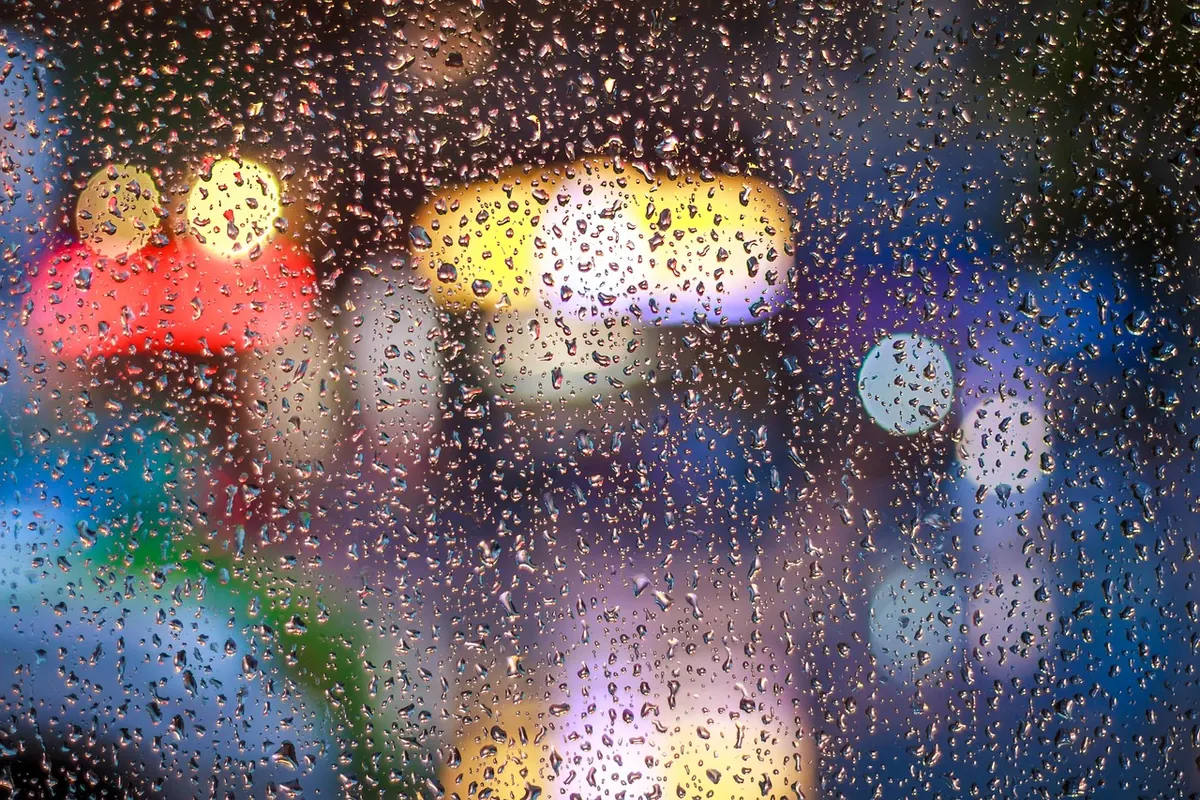
Manchester rain is rarely dramatic. It doesn't arrive with thunder and a stage-lit sky; it settles in, sits on the shoulder of your coat, and waits. You notice it halfway down Oxford Road when your left sleeve has gone cold, and by the time you get home, the idea of going back out has lost all appeal. The 142 is packed, the pavement outside the takeaway has become a small lake, and somewhere behind you a taxi is doing forty through a puddle that has been waiting all day for exactly that moment.
A good rainy-day playlist has one job: to make staying in feel deliberate rather than defeated. What follows covers tempo, genres, running order and a few honest track suggestions, so you can build something solid in twenty minutes instead of scrolling for an hour and giving up.
It helps to be clear about what the playlist is not. You aren't scoring the weather; you're scoring the hour you spend indoors while the weather happens. That distinction is why so many obvious picks fail — storm sound effects, songs with thunder on the intro, anything simply titled "Rain." They describe the weather back at you. A good playlist does something else: it gives the afternoon a shape.
Three Kinds of Manchester Rain
Rain here is not one thing. A playlist that works for a fine mist will feel wrong in a proper downpour, so work out which one you're dealing with first.
The drizzle
Fine, persistent, completely indifferent to your umbrella. This is the most common Manchester rain and the one worth planning for. It wants quiet music with space in it: solo piano, slow soul, ambient records where very little happens and that's the point. Keep percussion light. Anything with a stadium chorus will sound ridiculous against that window. Think Brian Eno's Music for Airports, Hania Rani's bare piano, or a single Bill Evans record left to run from start to finish without interruption.
The steady soak
Pavements running, buses spraying, everyone in the shop doorway pretending to check their phone. This is repetitive-weather music. Loops help. Dub, trip-hop, mellow house, long jazz vamps. Warmth matters more than melody — you want the musical equivalent of a radiator you can sit next to. This is the rain that lasts four hours and ruins a pair of shoes, so the playlist should be long enough to outlast it. Build an hour and a half minimum; you will not want to touch your phone halfway through.
The downpour
Brief, loud and genuinely impressive, usually when you're furthest from shelter. This is the only rain that earns a beat. Something at 120 BPM and above, preferably with a bassline you can walk to. It won't last. Neither should that section of the playlist — three or four tracks, then back down. Treat it as an interlude rather than a mood, and resist the temptation to build the whole list around it.
Tempo Bands That Actually Work
If you sort your playlist by only one thing, sort it by tempo. Mood tags are vague; beats per minute are not. As a rough guide:
- 50–70 BPM: piano, ambient, slow soul, modern classical. Perfect for drizzle and grey light.
- 75–95 BPM: downtempo, dub, hip-hop instrumentals, trip-hop. The workhorse range, and where most of your playlist should probably sit.
- 100–115 BPM: soul, funk, boogie, lighter house. Use sparingly — it can feel impatient against slow rain.
- 120–130 BPM: house, techno, drum and bass. Save it for the walk home, or the downpour.
100 BPM is often the wrong choice because it sits in the middle of nowhere: too quick to sink into, too slow to move to. For a locked-in feel, keep most of the list between 70 and 95, then allow yourself one deliberate jump up near the end. One. That jump is what stops forty minutes of grey becoming forty minutes of nothing.
If you don't know a track's tempo, most streaming apps will show it in the track details. If they don't, play fifteen seconds and tap your foot along, counting beats. You'll be within a few BPM, which is close enough for this purpose.
Genres That Wear Grey Well
Not every genre survives this weather. These four do, and between them they cover most of what you'll need.
Ambient and modern classical
Brian Eno, Aphex Twin's quieter piano pieces, Nils Frahm, Hania Rani, Max Richter. Long, unhurried, best played at a volume where you can still hear rain on the glass. Avoid dramatic builds unless you're actually watching the storm — a crescendo that peaks while the sky stays flat leaves you feeling cheated.
Jazz, soul and dub
Bill Evans, Alice Coltrane, Chet Baker, Nina Simone. Add GoGo Penguin and Matthew Halsall for the local version — both are Manchester players and both suit a wet window. Dub is the secret weapon: reverb, space, no urgency at all. A King Tubby record at low volume turns a grey afternoon into something almost luxurious.
Post-punk and the local canon
Joy Division's Atmosphere is almost too on the nose, but it works. So do New Order's Ceremony, The Smiths at their most subdued, and later Elbow and Doves records, which were essentially built for this climate. The Stone Roses and Happy Mondays are a different job entirely — those are for the walk home, not the sofa.
Slowcore and quiet guitar music
The fourth strand, and the one people forget. Mazzy Star, Galaxie 500, early Low, Nick Drake, Duster. Guitars played softly with the amp turned down, vocals almost mumbled, songs that take their time getting anywhere. This is what you put on when the drizzle has turned into an evening and you've stopped checking the forecast. It also ages better than ambient if you're listening for three hours rather than thirty minutes.
A Twenty-Minute Running Order
If you'd rather be told what to do, here's a template. It works for almost any rainy afternoon and you can fill it with your own records.
- One track under 65 BPM. A single piece, four to six minutes, no drums. This is the transition — the moment you stop being outside.
- Fifteen minutes in the 70–80 range. Ambient, slow soul, quiet jazz. Low volume. Resist adding anything busier; this is the section that does the actual work.
- The long middle at 85–95. Dub, trip-hop, hip-hop instrumentals. This is where the playlist lives, and where it should stay for the longest stretch.
- One jump to 120+. Two or three tracks, maximum. House, drum and bass, whatever gets you moving. This is the downpour section.
- Land it. Finish on something slow and warm rather than stopping dead. A final piano piece or a soul ballad makes the whole thing feel intentional.
Three Mistakes That Ruin a Rain Playlist
- Making it entirely sad. Rain plus melancholy is a feedback loop. Six miserable songs in a row doesn't produce atmosphere, it produces a mood you then have to climb out of. Mix in something warm every twenty minutes.
- Making it too long and too varied. A four-hour playlist with forty genres in it is just a shuffle in disguise. Aim for one clear arc, even if the arc is only an hour.
- Leaving shuffle on. Order is the whole point. Shuffle throws out the tempo map you just built and drops a 128 BPM house track between two piano pieces.
The test of a good rain playlist is simple: when it ends, you should feel like you chose to stay in, not like you gave up on going out.
Five Tracks Worth Starting From
If you want somewhere concrete to begin, these five cover the range and behave well in sequence.
- Brian Eno — An Ending (Ascent) — the drizzliest opener ever recorded. Almost no percussion, all space.
- Massive Attack — Teardrop — the steady soak in one track. Slow, warm, endlessly repeatable.
- Bill Evans — Peace Piece — eight minutes of piano that never resolves. Ideal for the long middle.
- GoGo Penguin — Hopopono — Manchester, piano trio, gently propulsive. The bridge between the middle and the jump.
- New Order — Ceremony — the local canon, but played soft. Good for the landing.
Build it once, save it, and don't overthink it. Manchester will provide plenty of opportunities to test it, probably before the week is out — the rain doesn't need your permission and it isn't checking your calendar. The least you can do is have something ready for it.
Photo: StockSnap / Pixabay